
Driving across the Salar de Uyuni ranks easily among the top five experiences of our many years of full-time travel. It’s an unforgettable adventure, and although we initially planned for just one night, the sheer beauty and complete silence kept us there for five nights. Check out our video “Overlanding the Bolivian Salt Flats,” where we not only explore the flats in our truck but I also have some fun on my electric scooter, drone in chase, heading for the horizon that never comes.
Visiting Salar de Uyuni is a bucket-list dream for many overlanders. Here are a few practical tips we picked up along the way that you might find useful.
1. Seasonal Considerations
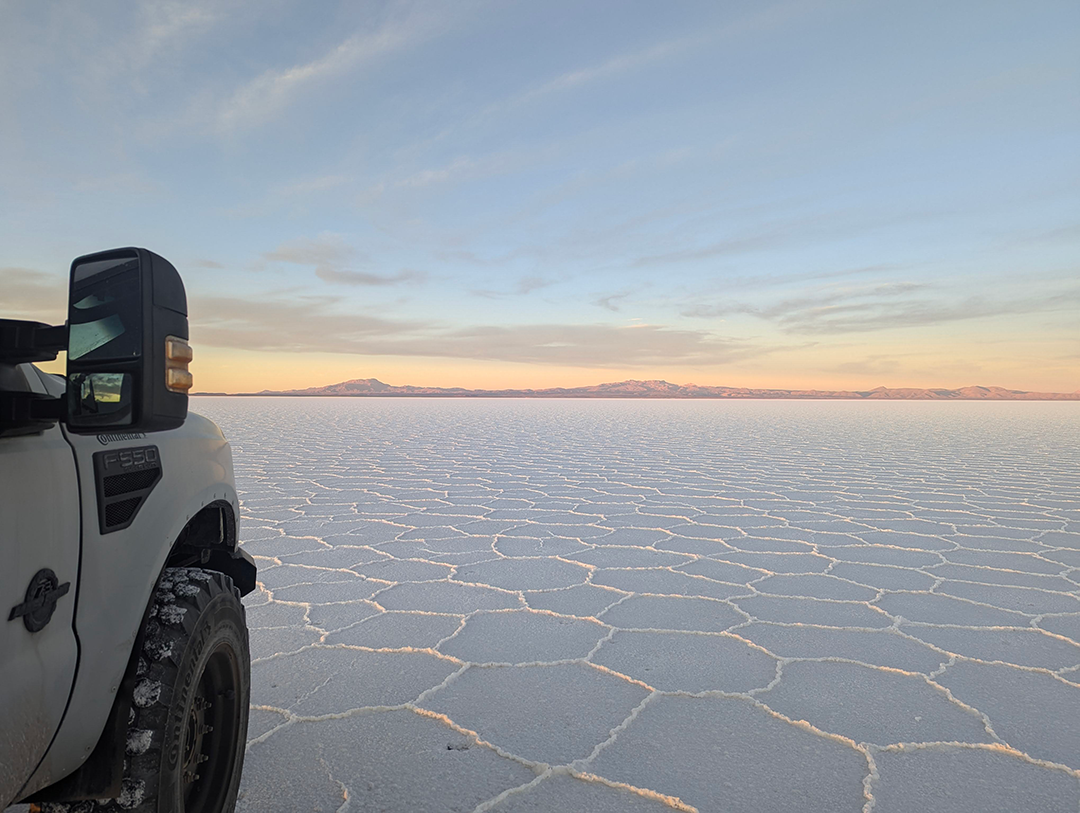
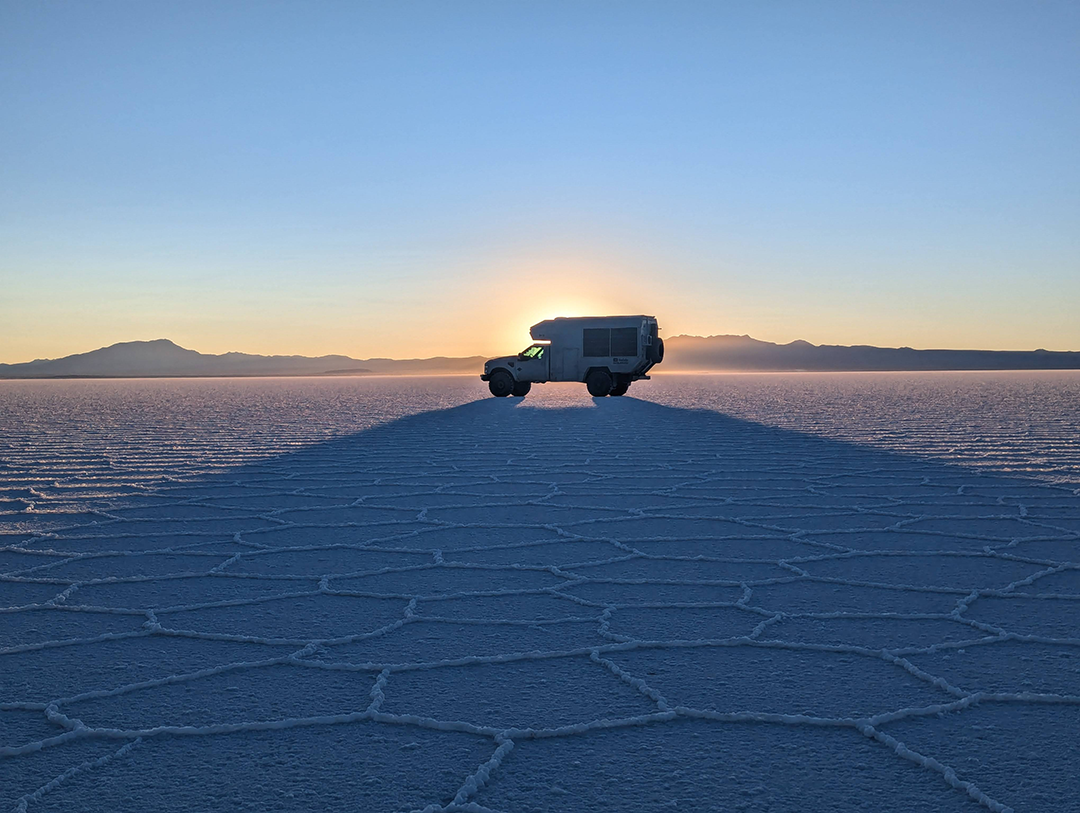
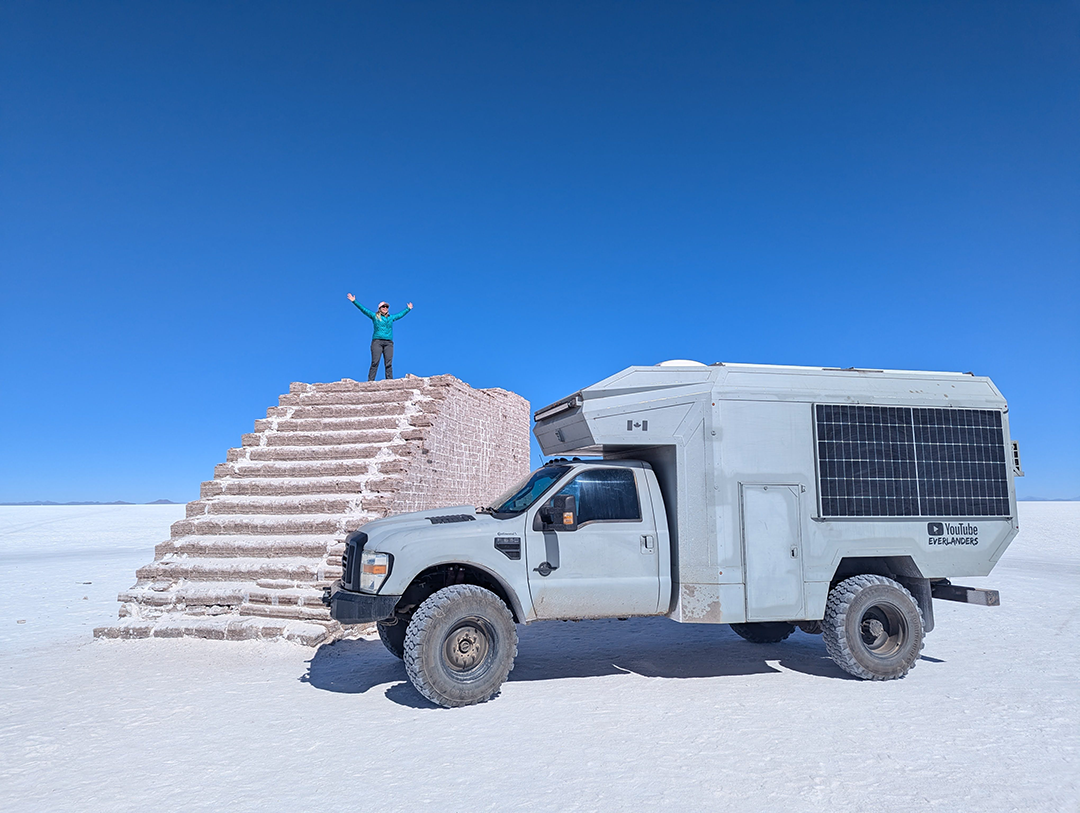
The first step in planning your trip to Uyuni is deciding when to visit. The dry season runs from April to November, while the wet season extends from December to March, each with its own pros and cons. During our visit in the dry season, the salt flats were firm and easily supported our 6.7-tonne rig. The famous geometric patterns on the dry salt surface made for some incredible photographs. However, visiting in the dry season means missing the stunning mirror effect created by water covering the flats.
The wet season offers breathtaking mirror reflections perfect for amazing photographs, but it also increases the risk of getting stuck, especially in transitional areas between hard and soft sections of the flats. Additionally, saltwater poses a greater corrosion risk to your vehicle, which brings us to our next important consideration.


2. Preparations
When driving your own vehicle onto the salt flats, it’s essential to consider protective measures to minimize potential damage to the undercarriage and critical vehicle components. In the town of Uyuni, there are several car washes that provide a rust-proofing spray—typically a blend of diesel and used engine oil—to protect your vehicle.
Once your vehicle is protected, ensure you’re fully prepared with fuel. Obtaining fuel in Uyuni can be challenging due to frequent shortages and delays in fuel truck arrivals, as this is a remote location.
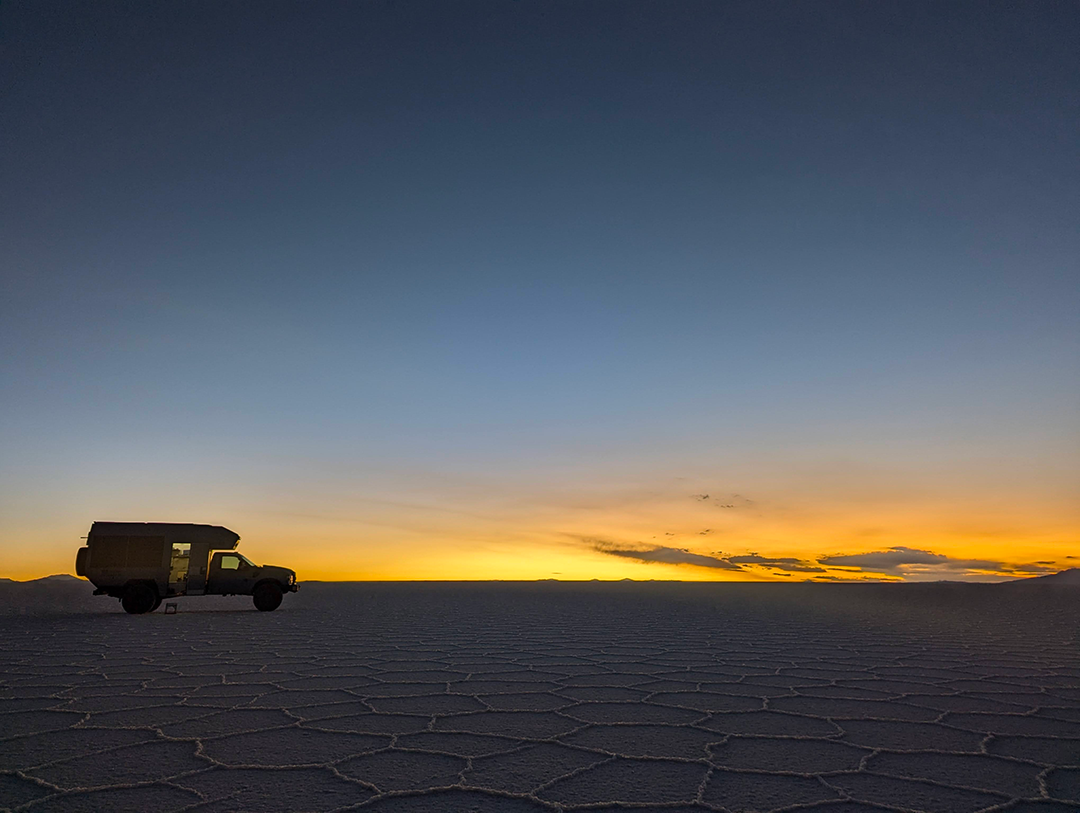
Additionally, carry ample food and water. Even if your initial plan is a short stay, unexpected situations may extend your visit. We planned one night and ended up staying five just because it was so stunningly beautiful! Others we met spent days recovering their vehicles from the flats. Being well-prepared with several days’ worth of supplies is crucial since services are basically non-existent out on the flats (with the exception of the Salt Hotel and a few snacks sold at Isla Incahuasi).
Lastly, don’t forget to pack recovery gear such as traction boards, a tow rope, and a shovel to handle any potential situations on the salt flats.


3. Navigation
Having Starlink onboard is common for most overlanders today. If you don’t have Starlink in your rig yet, consider checking out “DIY Starlink Flat Mount RV Roof Adaptor Powered by 12 Volts” or if you have the new Starlink Mini consider watching, “DIY StarSled Go – Cheapest Smallest Starlink Battery Pack.” Remember that cell phone coverage will be limited/zero.
Navigating the vast expanse of the Salar de Uyuni can be challenging, covering approximately 10,582 square kilometers (4,086 square miles), it is the world’s largest salt flat. The salt flat stretches about 160 kilometers (99 miles) in length and 135 kilometers (84 miles) in width. This expansive, featureless terrain can make orientation difficult, as the uniform landscape offers few reference points, aside from the islands towards the middle.
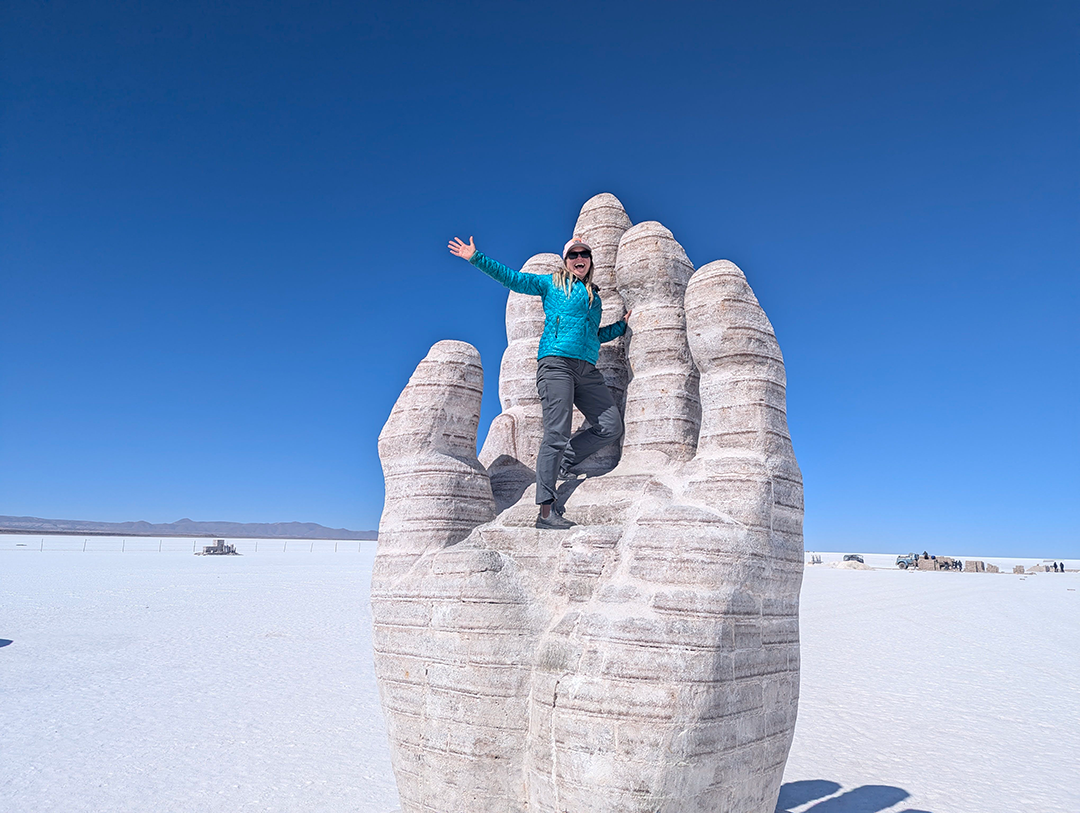
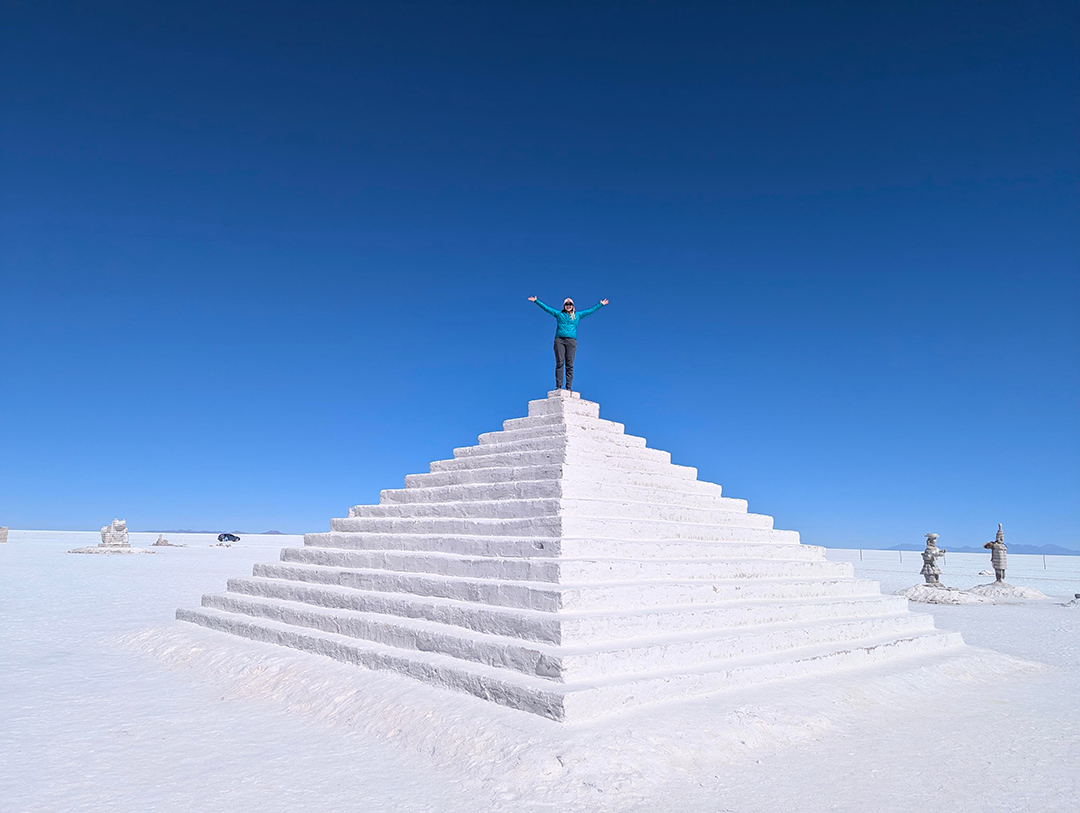
A convenient access point is located 20km north of Uyuni in the town of Colchani. This entrance is suitable for any vehicle and provides a smooth and direct route to attractions like the Salt Hotel, Dakar Monument, and salt statues. Commonly used paths are fairly obvious, but it’s incredibly tempting to venture off the beaten track and leave the first tire tracks of the season on pristine salt geometric patterns formations—tempting but more risky for sure! For adventurous spirits with capable 4×4 vehicles, numerous other access points are possible.


4. Sun Protection
No matter when you visit, the sun at Salar de Uyuni is incredibly intense, with sunlight reflecting off the white salt surface greatly increasing the risk of sunburn. Despite daytime temperatures reaching up to 30°C during the wet season, ensure you keep your skin covered as much as possible and wear sunglasses. If you visit during the dry season, prepare for extremely cold nights, as temperatures can drop to -10°C. Pack accordingly for both hot days and chilly nights.


5. Post Salt Flats Care
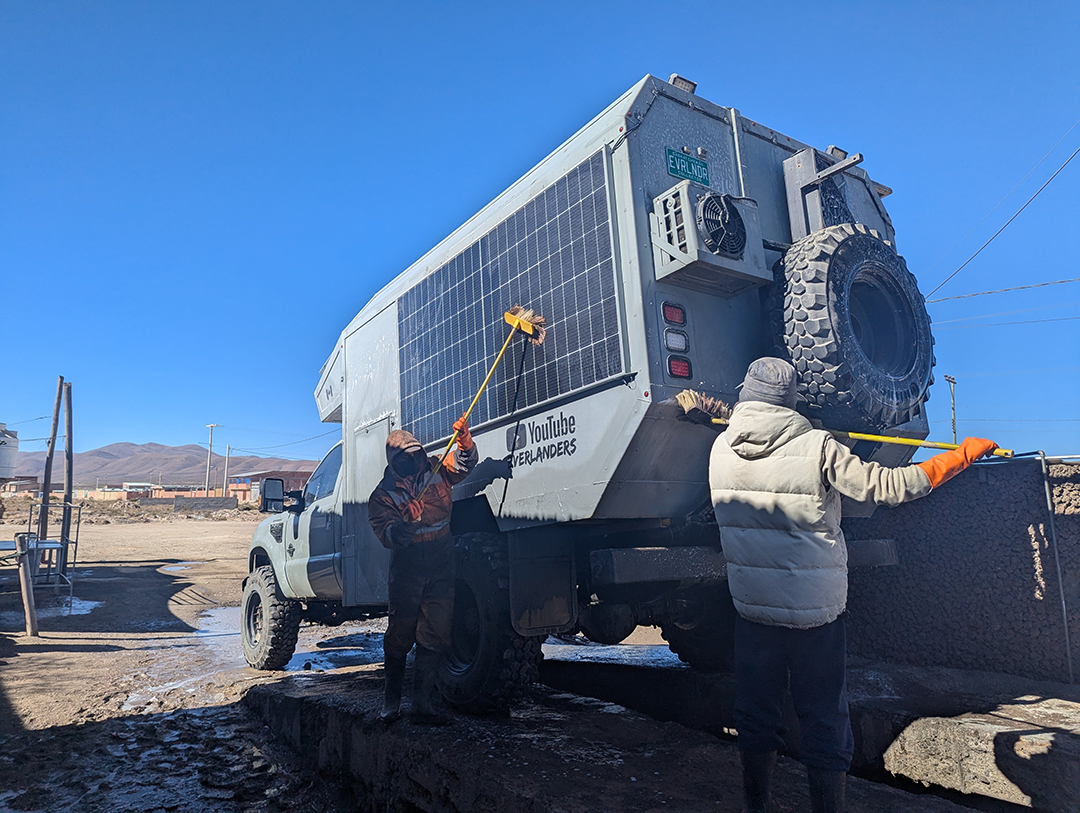
After your adventure on the salt flats, it is essential to thoroughly rinse your vehicle. Several facilities in and around Uyuni offer car washing services. We recommend Lavadero Maria Elena, a very overlander-friendly option that even provides drinking water and hot showers.

While driving your beloved overland rig on the salt flats may seem daunting, the surreal beauty and incredible experience will leave you with lasting memories and spectacular photos for a lifetime.
 Everlanders