
Although Machu Picchu was one of my favorite archaeological sites in Peru, it’s far from the only one worth visiting. The Sacred Valley, nestled in the Peruvian Andes, is full of remarkable Inca ruins—each with its own unique history—as well as traditional villages, stunning mountain scenery, and incredible artisanal goods. We’ve gathered a list of our favorite archaeological sites in the region, but there’s one important thing to know before you start exploring.
If you’re planning to visit more than one site, it’s well worth purchasing the Boleto Turístico del Cusco (Cusco Tourist Ticket)—a multi-site pass that gives you access to 16 locations over 10 days. Just note that this ticket does NOT include entrance to Machu Picchu or the Maras Salt Mines, which must be purchased separately.

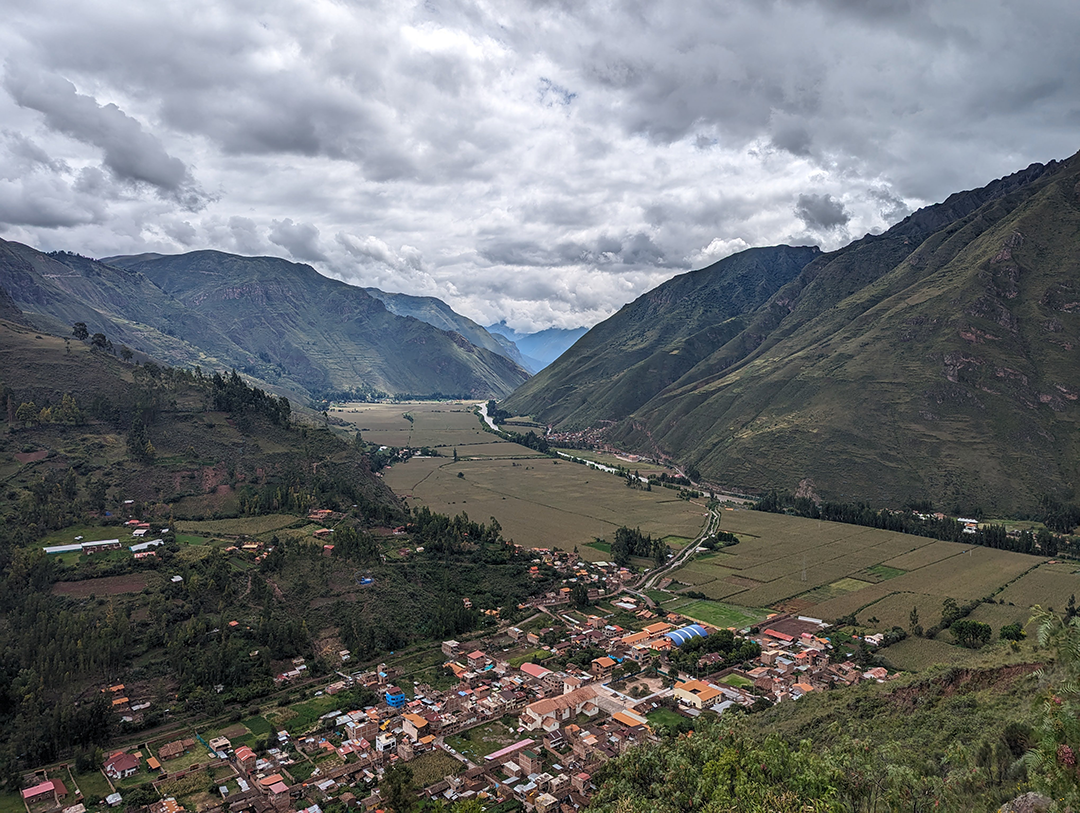
1. Ollantaytambo: Living Inca History
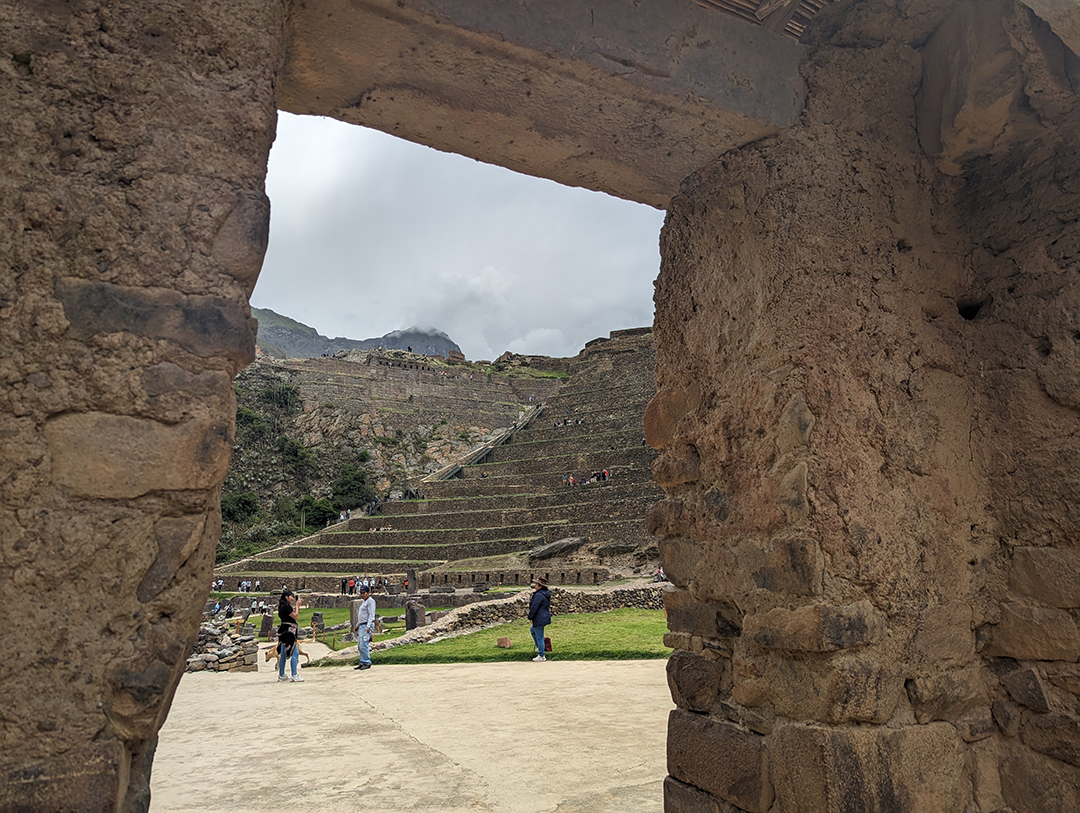
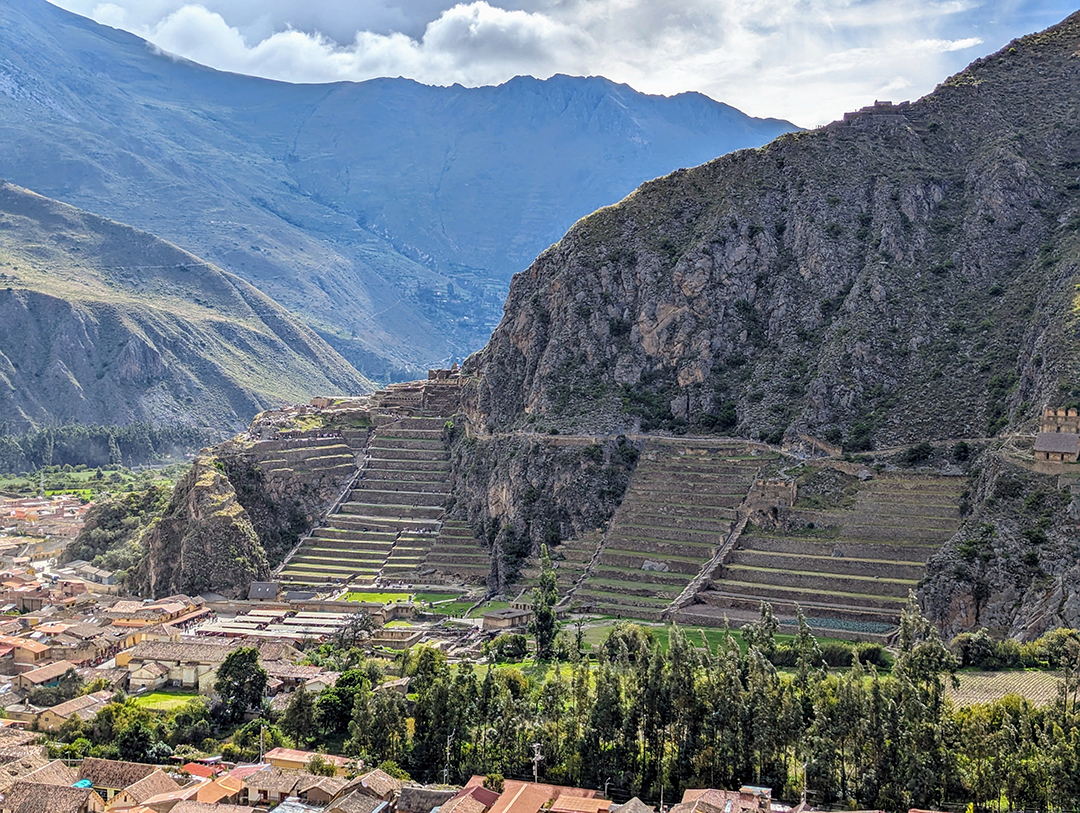
The town of Ollantaytambo is one of the few places in Peru where you can still walk through streets laid out using original Inca urban planning. With its narrow cobblestone alleyways, flowing canals, and terraced hillsides, it truly feels like stepping back in time. Many travelers use Ollantaytambo as a jumping-off point for Machu Picchu, as the train stations for the PeruRail and Inca Rail are located here.
For overlanders, it’s also a great place to store your vehicle before taking the train to Machu Picchu. If you’re planning your visit and looking for advice specific to overland travel, check out our full post: “What I Wish I Knew Before Visiting Machu Picchu,” a step-by-step guide specifically for overlanders. But don’t just rush through the town, as Ollantaytambo has many delicious Peruvian restaurants and an impressive archaeological site that is not to be missed.
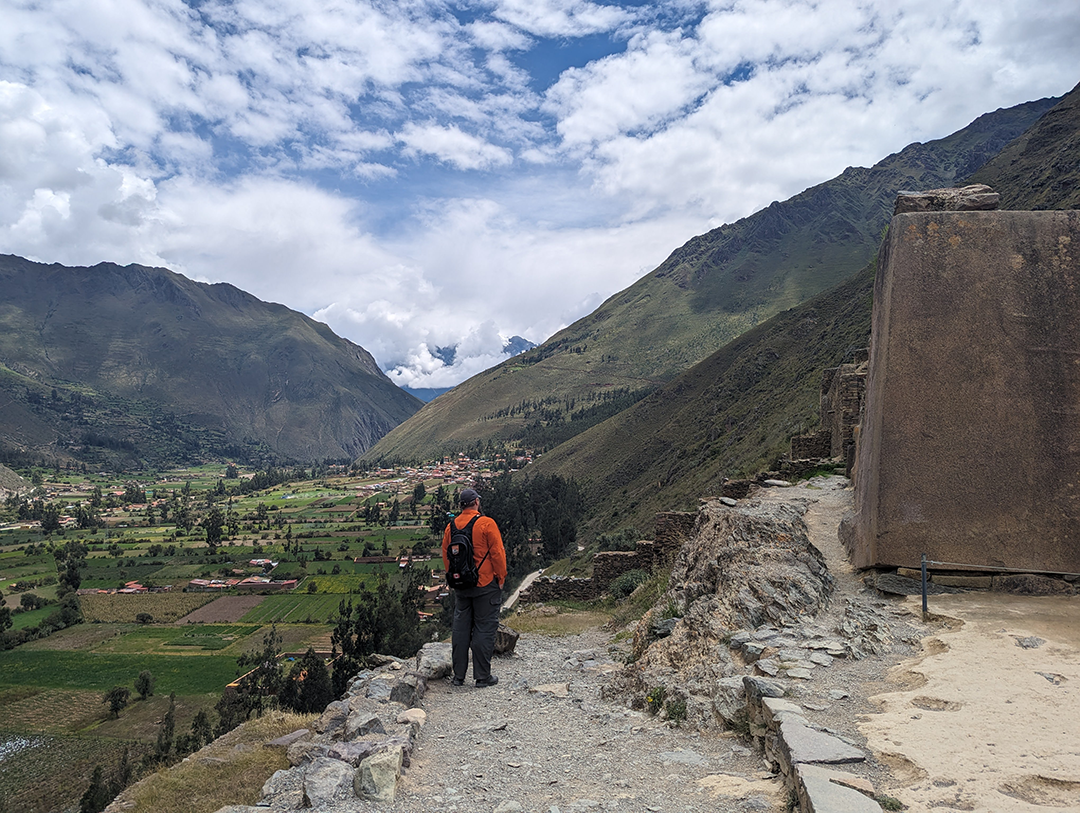
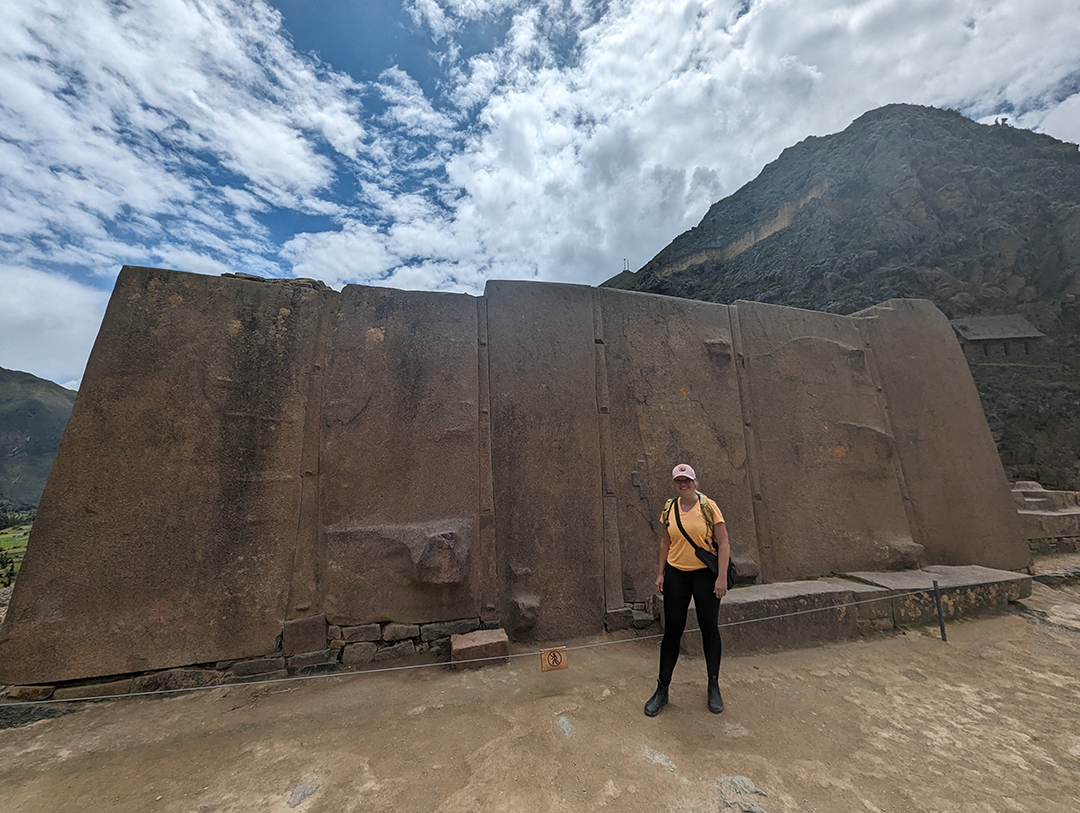
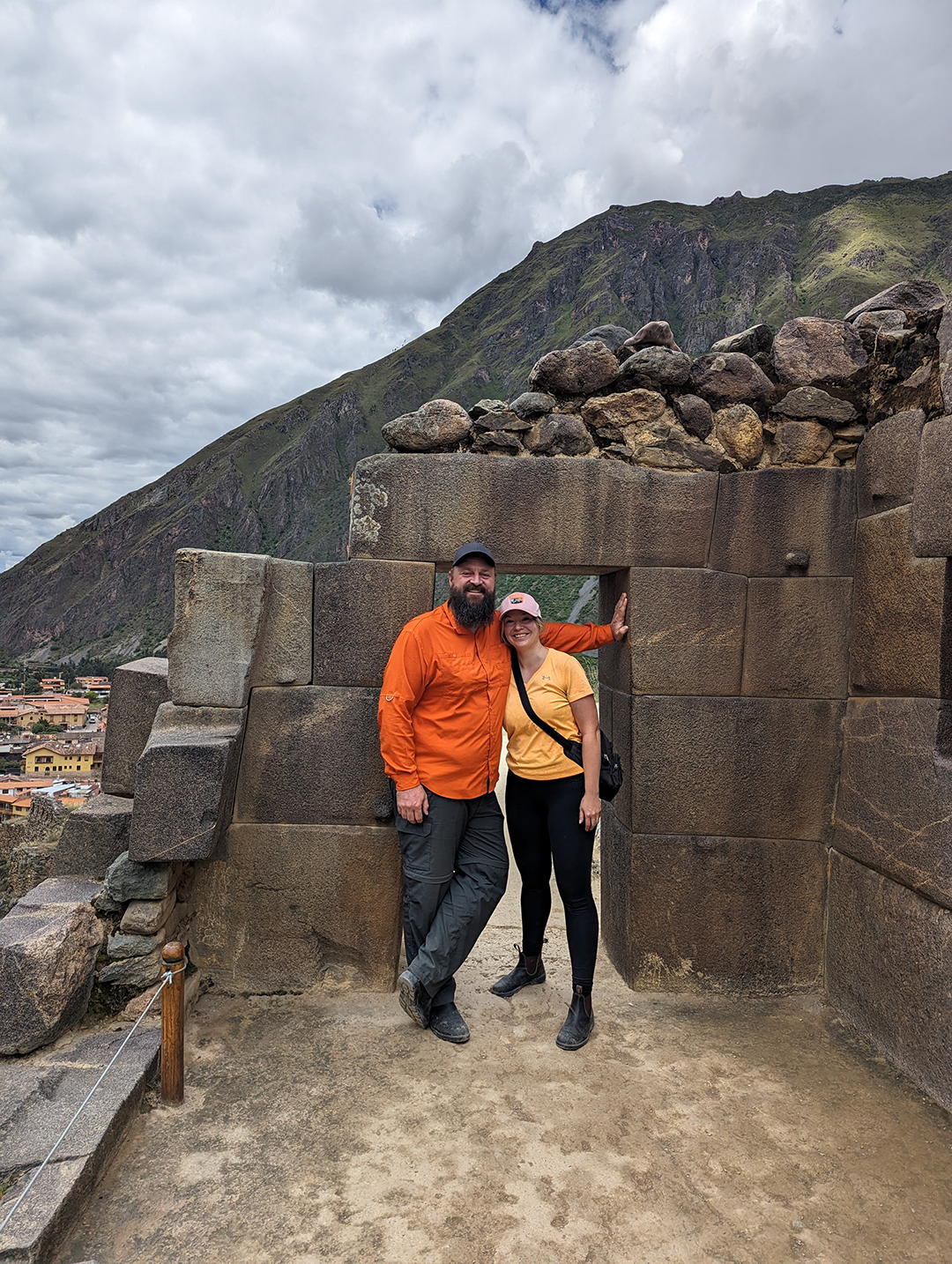
The main attraction is the Ollantaytambo archaeological site, which is included in the Cusco Boleto Turístico. The steep climb up the terraces leads to incredible views of the Sacred Valley, as well as the Temple of the Sun, where massive pink granite blocks were used in ceremonial structures. We were amazed by the craftsmanship; in fact, the stonework here felt even more intricate than at Machu Picchu.
We also enjoyed wandering the quieter parts of the archaeological site exploring the working stone canals, fed by nearby springs—another reminder of the Inca’s advanced engineering. We even met a few llamas along the way!
If you have extra time and energy, you can hike up the mountain directly across from the terraces to reach the Pinkuylluna Granaries, ancient Inca food storehouses built into the cliffside. The hike is free, less crowded, and gives you an amazing view looking back over Ollantaytambo and the ruins.
Whether you’re on your way to Machu Picchu or just passing through the Sacred Valley, Ollantaytambo is a must-visit stop on any overland route through Peru.





2. Moray: The Inca’s Agricultural Lab
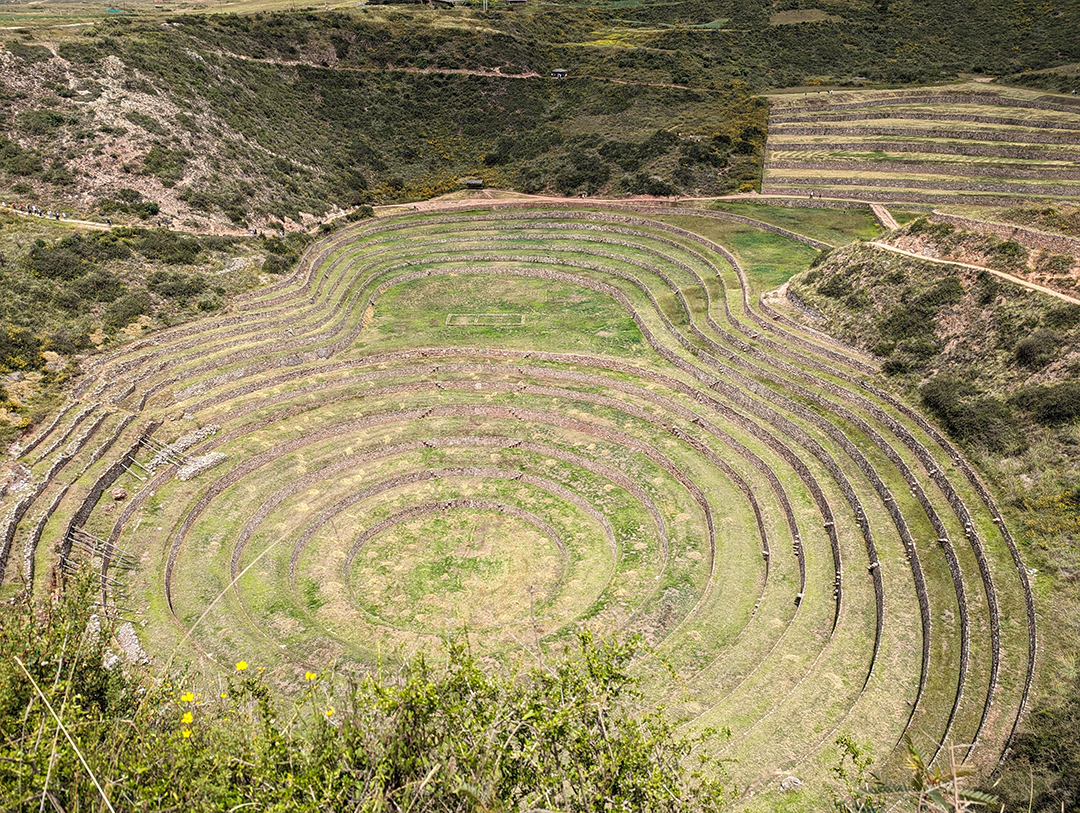
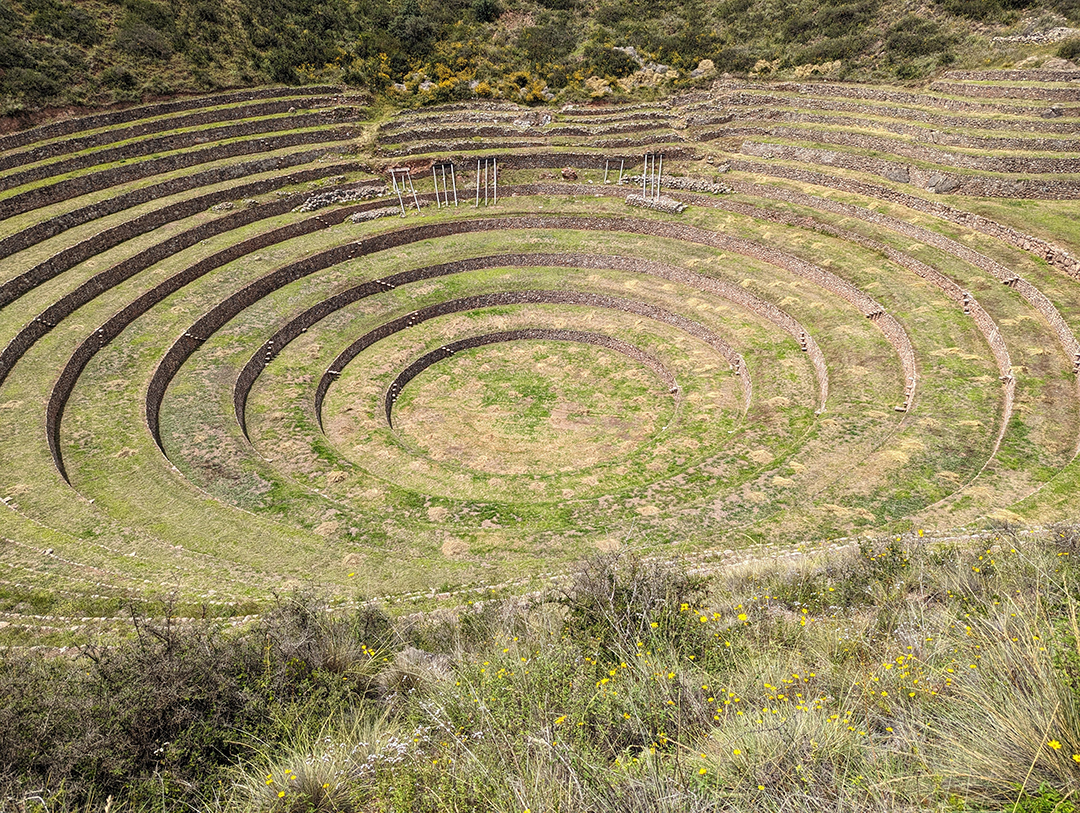
About 20 miles (32 kilometers) from Ollantaytambo—roughly a 1.5-hour scenic drive through the Sacred Valley—you’ll find the unique archaeological sites of Moray. Sitting at an altitude of 3,500 meters (11,500 feet), Moray features a series of circular terraces arranged in deep, bowl-shaped depressions carved into the earth. It may not have the grandeur of Machu Picchu, but what it lacks in size it makes up for in sheer ingenuity.
Moray is believed to have been an Inca agricultural laboratory, designed to test how different crops grew in varying climates. Each level of the terraces creates a slightly different microclimate, with temperatures differing by as much as 15°C (27°F) between the top and bottom. The Inca used this clever system to adapt plants to different altitudes throughout the empire. The site also features an advanced drainage system that prevents water from pooling—another example of just how brilliant Inca engineering truly was. If you’re overlanding the Sacred Valley, Moray is absolutely worth the detour for both the views and the fascinating history.



3. Maras Salt Mines: Ancient Salt Harvesting
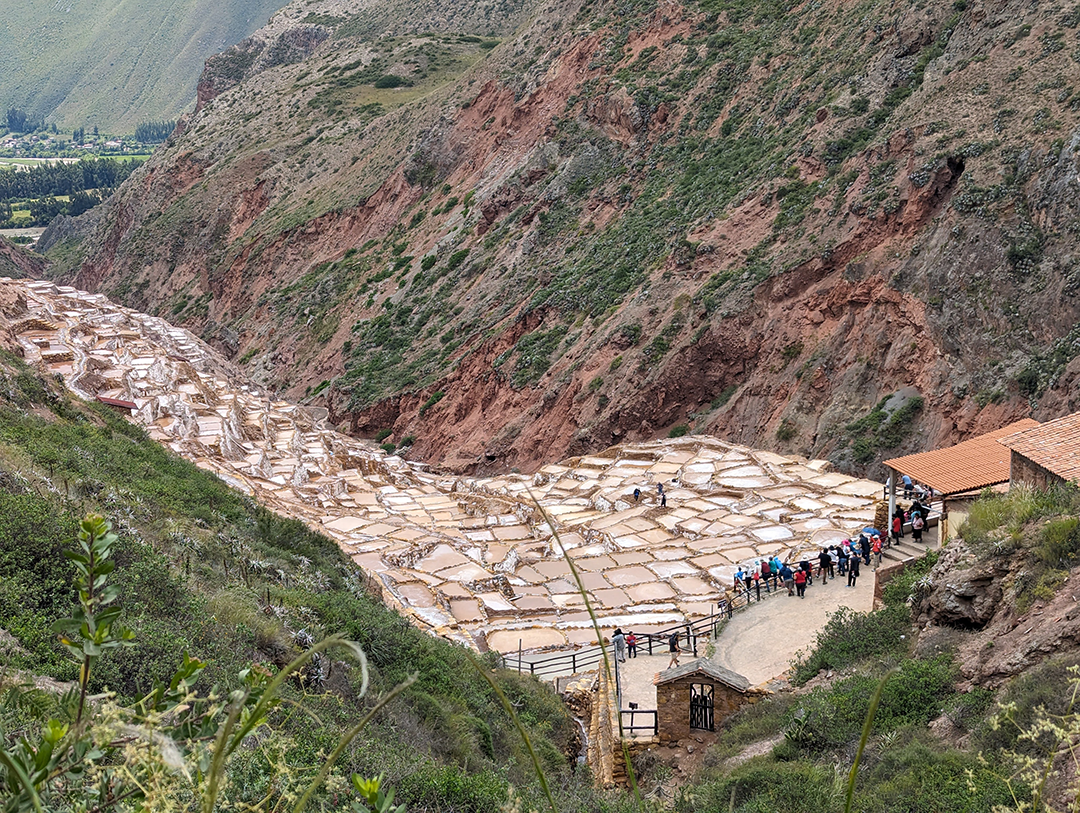
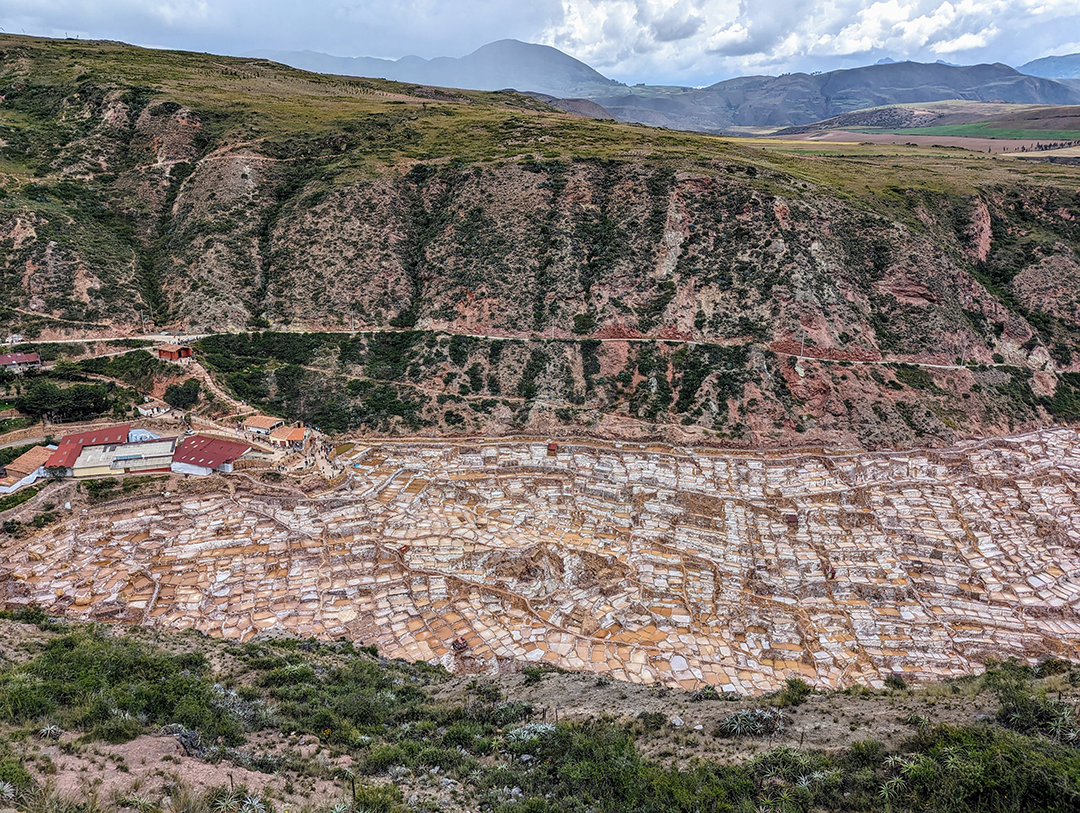
Although the Maras Salt Mines aren’t included in the Cusco Tourist Ticket, they are absolutely worth a stop—especially since they’re located just 7 kilometers from Moray, making it an easy 20–30 minute drive on a scenic, unpaved road. Entry costs around 3 USD (or 10 soles), and surprisingly, that even included a small packet of salt as a souvenir. Out of all the sites we visited in Peru, this was one of our favorites—second only to Machu Picchu.
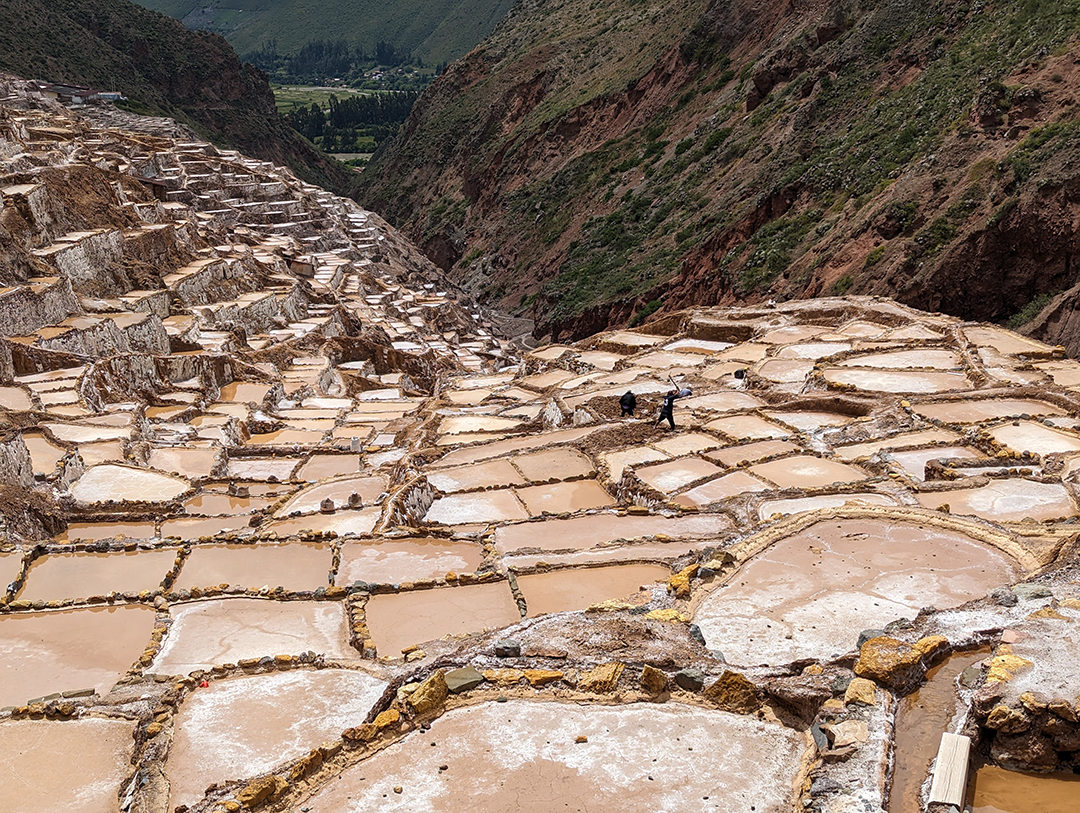
The site features over 3,000 salt evaporation ponds terraced along the hillside at 3,380 meters (11,089 feet) in the heart of the Sacred Valley. These salt ponds have been in use since pre-Inca times, and they’re still operated by local families today. During our visit, we even saw people actively harvesting salt by hand. The system works by channeling a natural underground spring, rich in salt, into the ponds. The sun does the rest, evaporating the water and leaving behind crystallized salt, just as it has for centuries.
After taking in the view, we explored the small booths, where you can buy freshly harvested salt in a variety of flavors. We bought two grinders—one with smoked salt and another infused with aromatic herbs—and we seriously regretted not buying more. It’s hands-down the best salt we’ve ever tasted, and it’s something we now reach for in our camper kitchen every day. If you’re overlanding the Sacred Valley, don’t skip the unique experience of Maras.


Note for Overlanders:
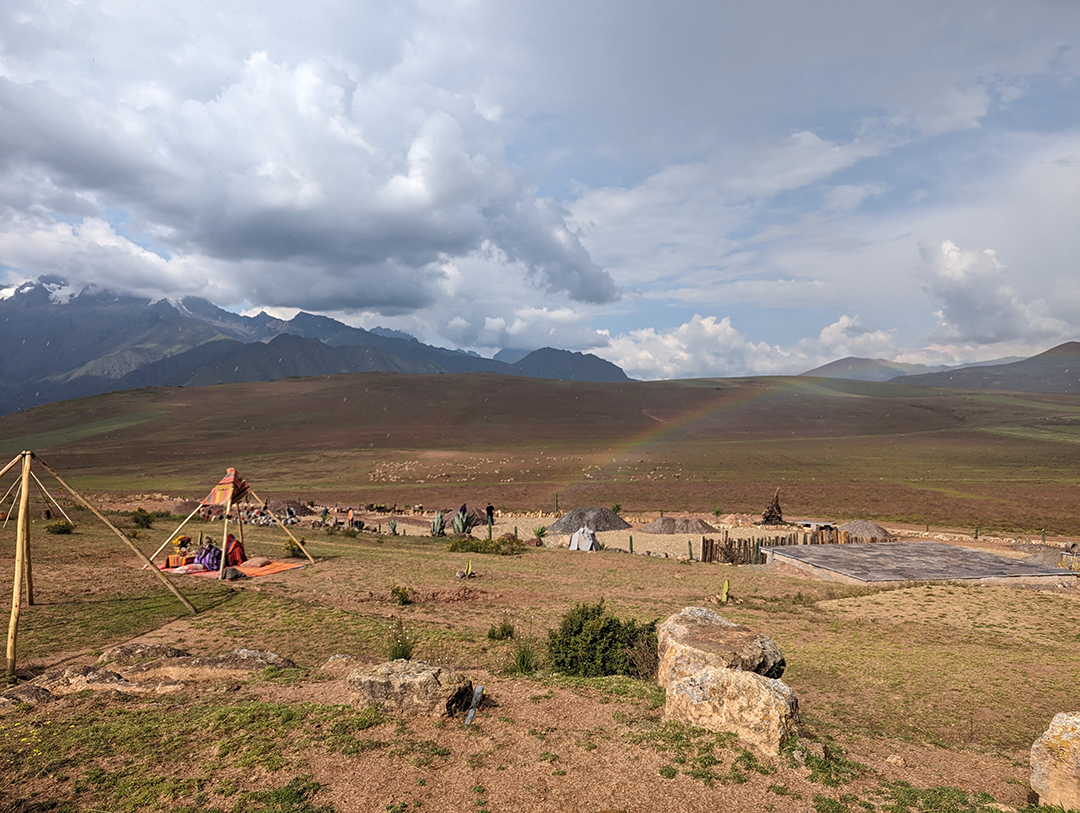
If you plan on visiting both Moray and Maras, there’s a special spot tucked between the two that you won’t want to miss—The Mountain View Experience. This unique lodging and dining destination in the Sacred Valley offers more than just incredible views. While you can rent one of their stylish A-frame cabins (some even come with a private jacuzzi), overlanders are also welcome to stay in their parking area if dining at the restaurant.
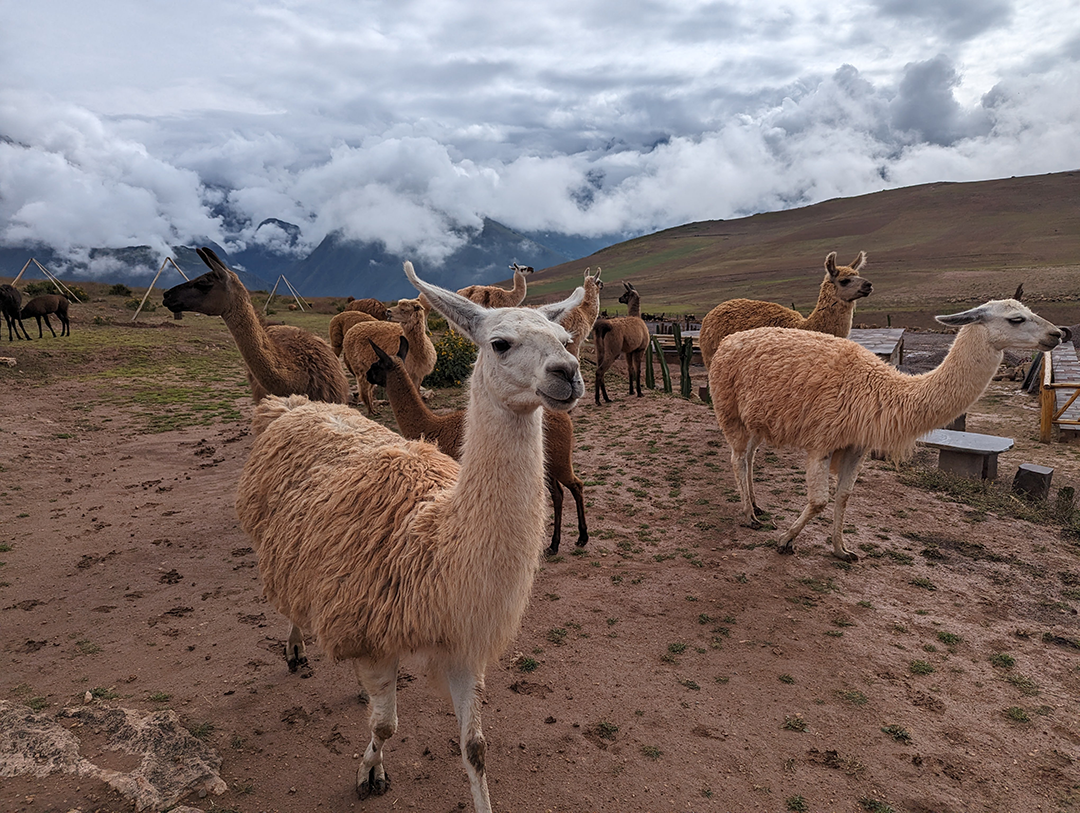
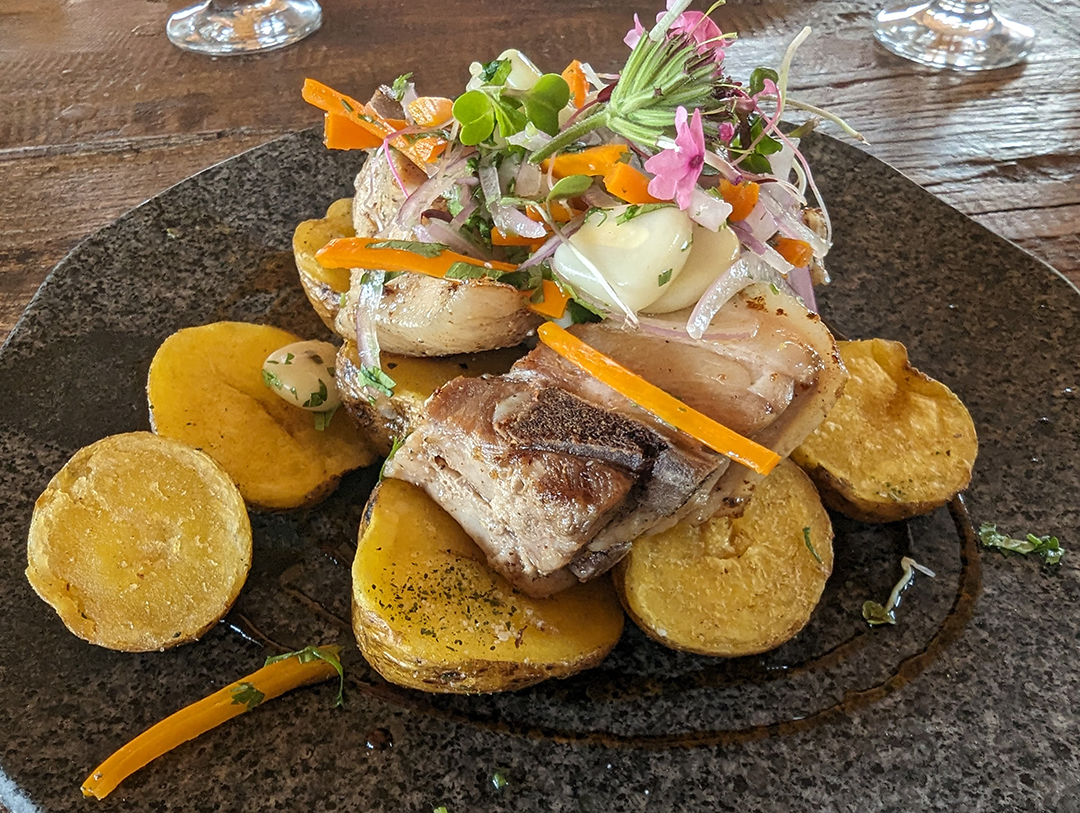
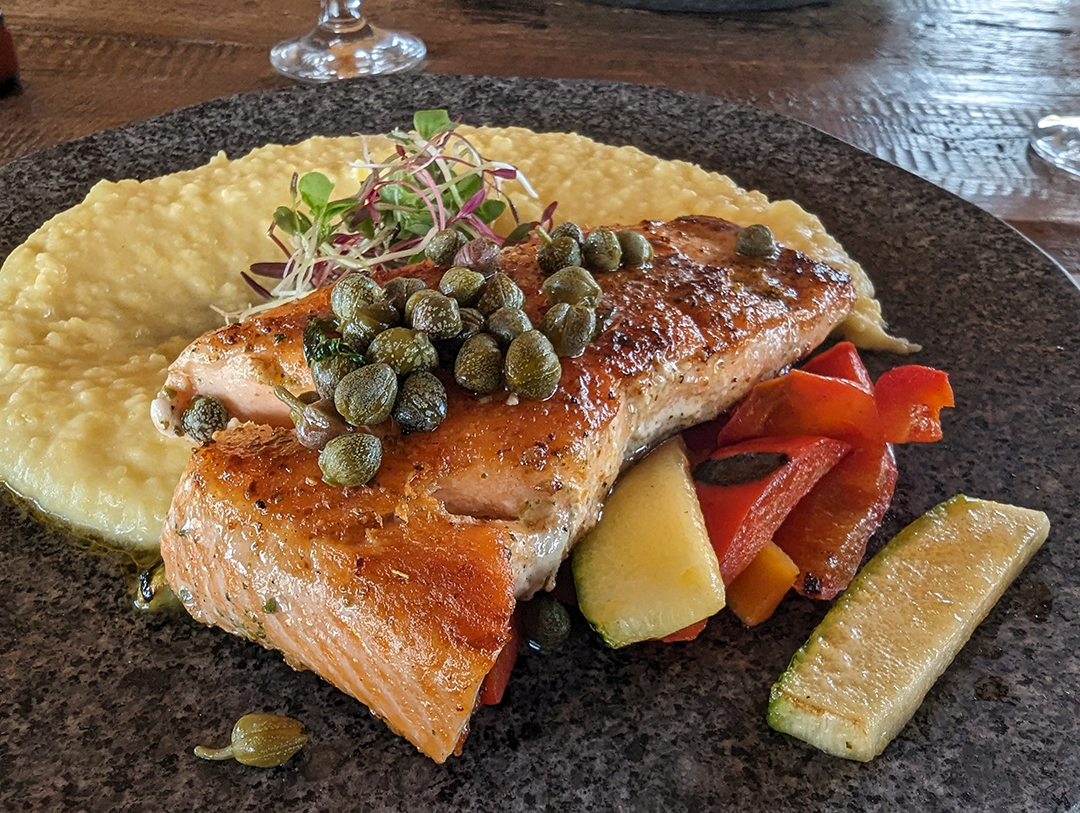
And let me tell you—the restaurant does not disappoint. The food was beautifully presented and absolutely delicious. But the true highlight for me was spending time with the resident llamas and alpacas that roam the property. Guests are given small baskets filled with corn husks, and once the animals catch wind of that, it doesn’t take long before you’ve made friends!



4. Pisac Ruins: Terraces and Temples
The colorful town of Pisac is located about 20 miles (33 km) from Cusco and is best known for its vibrant artisan market, which is held daily but becomes especially lively on Sundays. You’ll find everything from handmade textiles and alpaca sweaters to ceramics, jewelry, and fresh produce. Just above the town, winding up 5 miles (8 km) along a narrow mountain road, lies the Pisac Ruins.
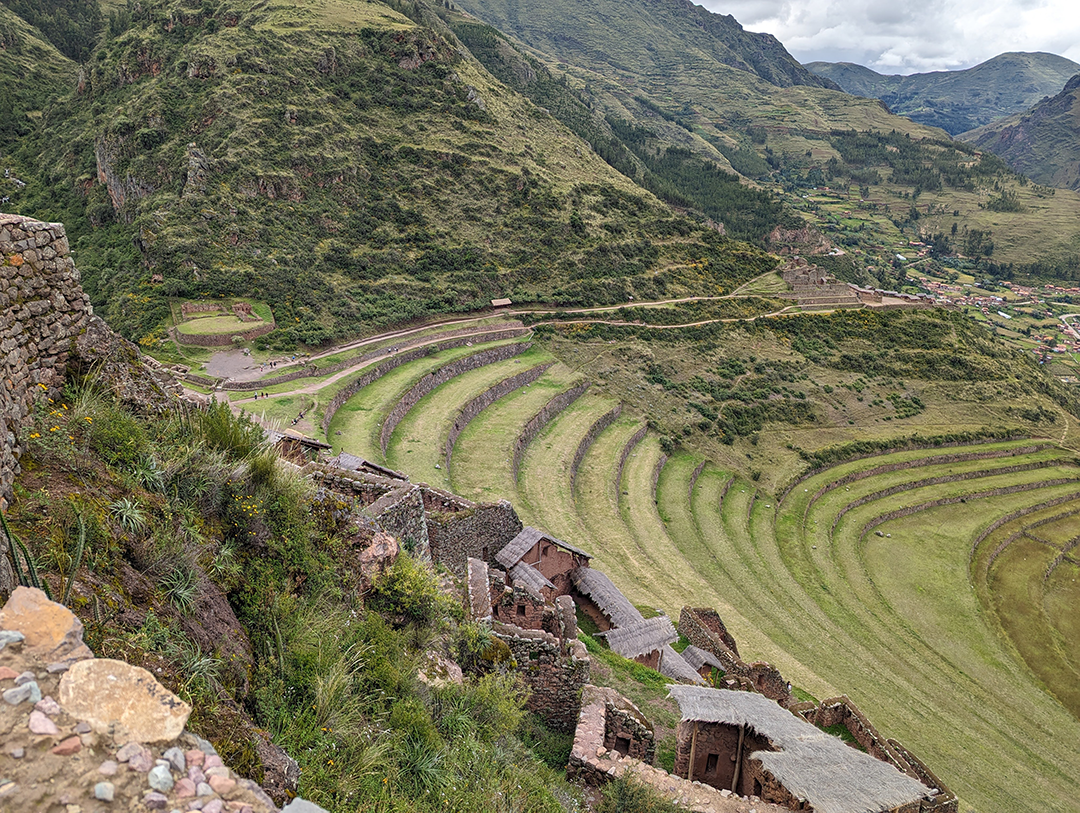
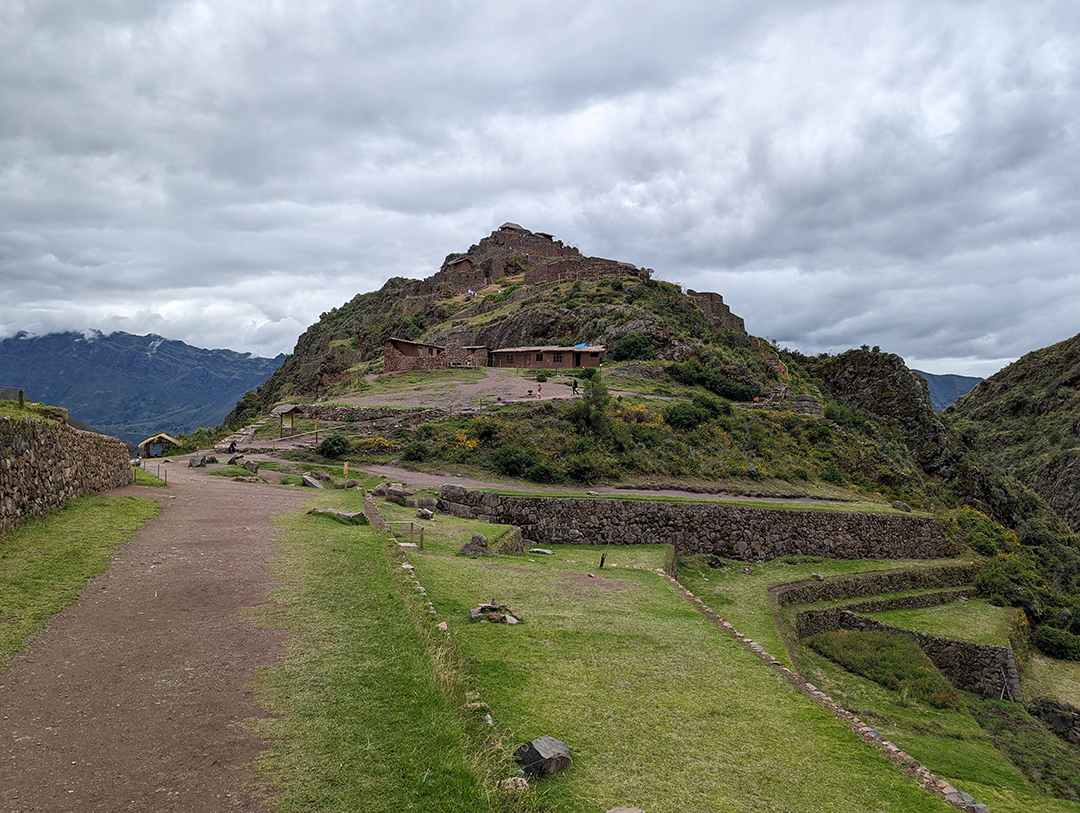
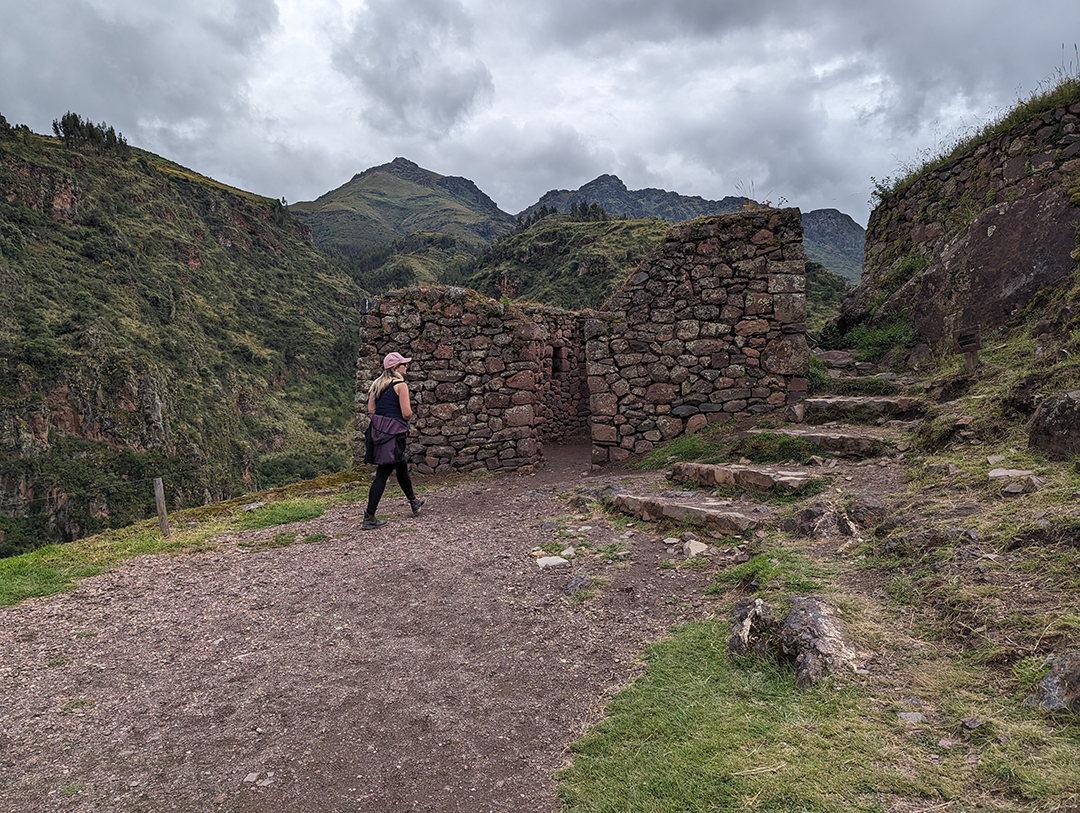
This site is one of the largest and best-preserved ruins in the Sacred Valley, and it’s included in the Cusco Boleto Turístico. Set high on a mountain ridge at over 3,000 meters (9,800 feet), the Pisac ruins offer a stunning combination of agricultural terraces, ceremonial sites, residential areas, and a military fortress—all with panoramic views of the valley below.
What sets Pisac apart is the sheer scale of the terraces, which cascade down the mountainside in precise, sweeping curves. These terraces were not only used for farming but also for erosion control and water management, demonstrating the Inca’s deep understanding of high-altitude agriculture. The Temple of the Sun, located at the highest point, is aligned with the solstices and features finely cut stone masonry similar to what you’d see at Machu Picchu. Unlike Machu Picchu, Pisac is quieter and more peaceful, but you’ll still want to give yourself 3–4 hours to explore it fully.


5. Sacsayhuamán: Massive Stones and Inca Ingenuity
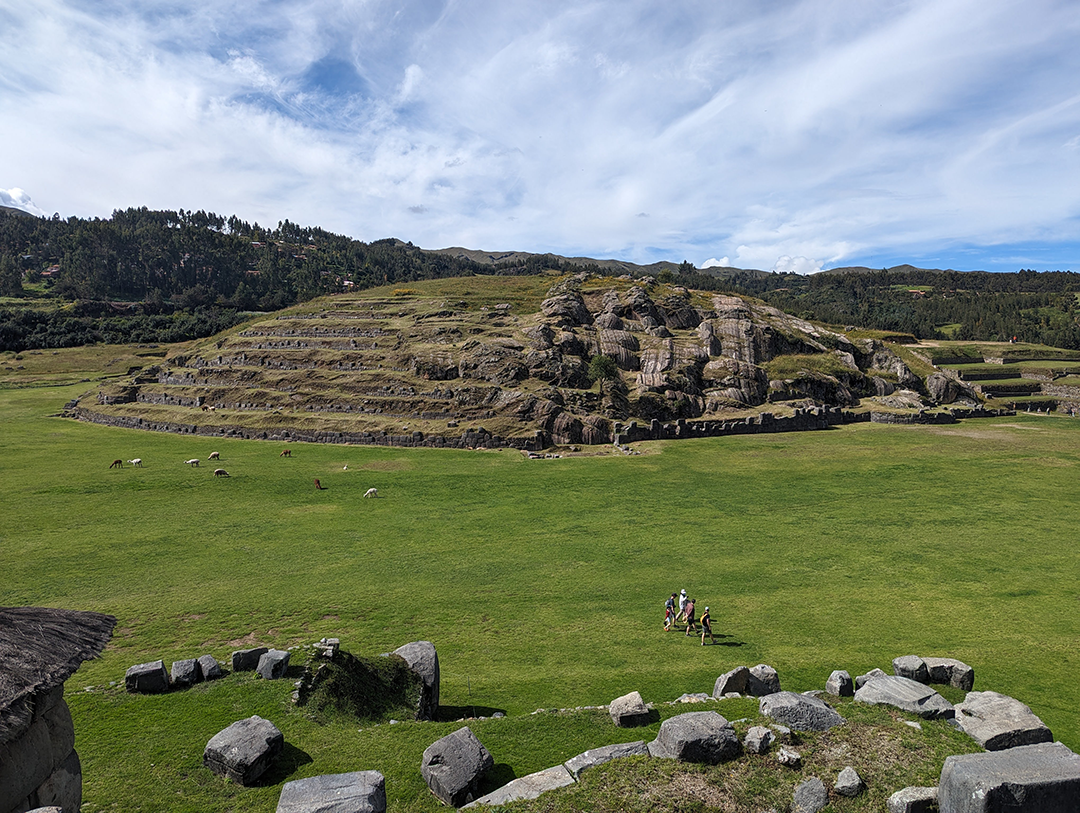
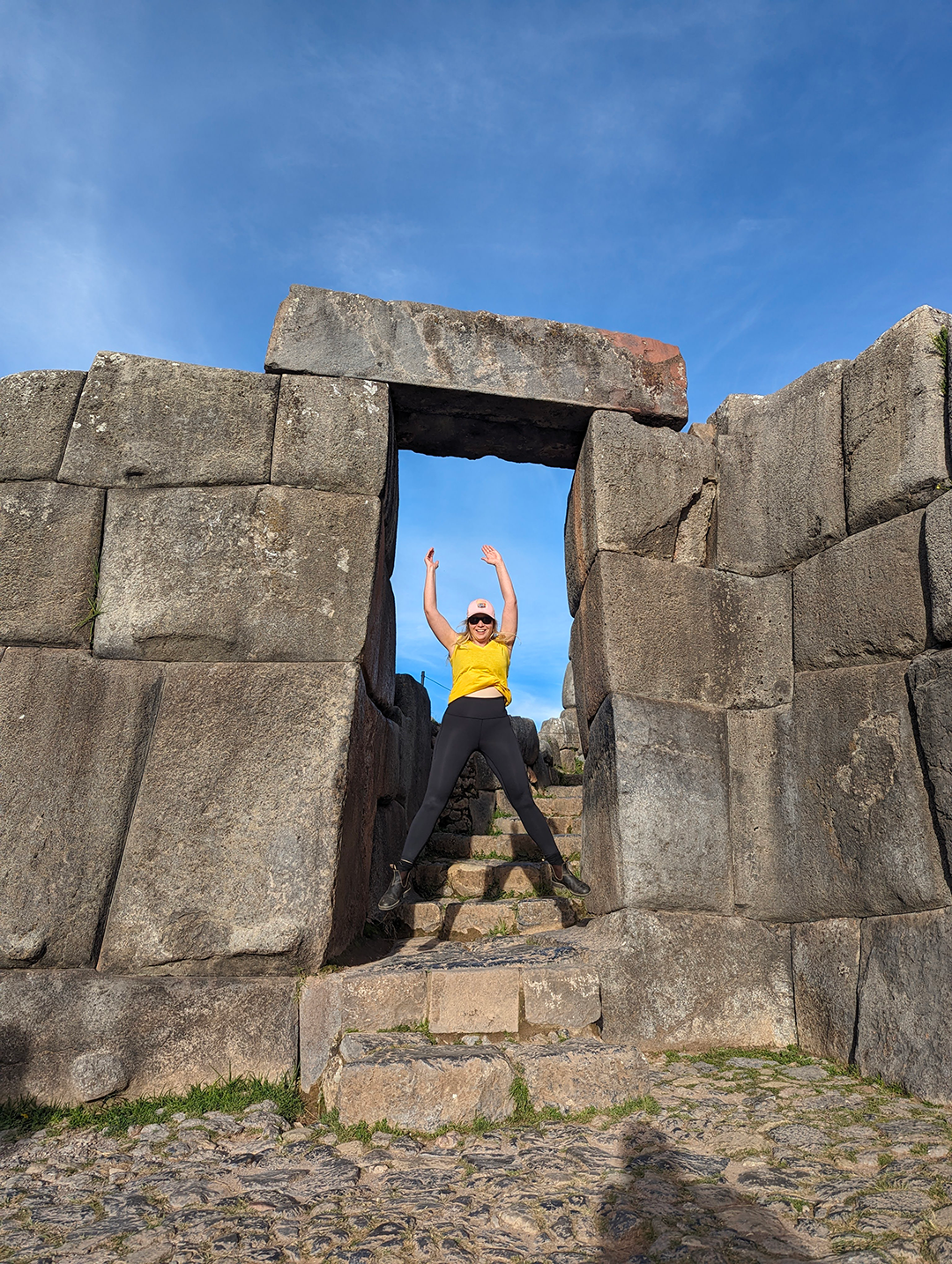
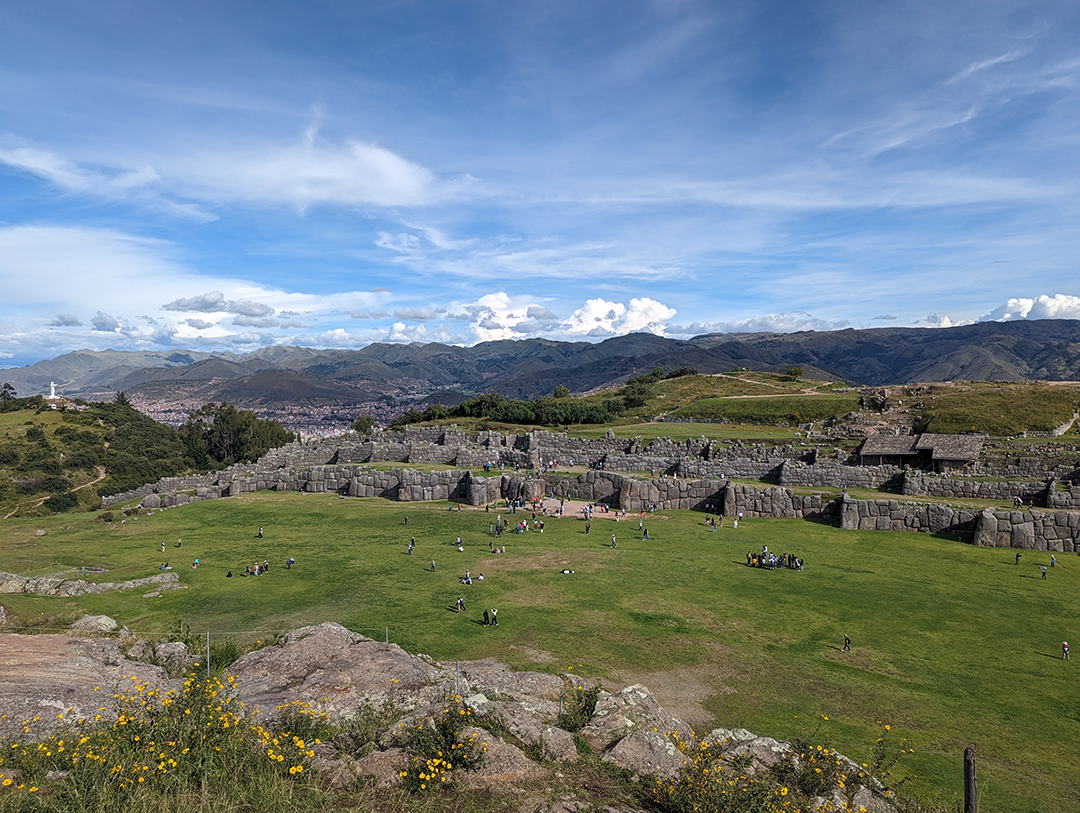
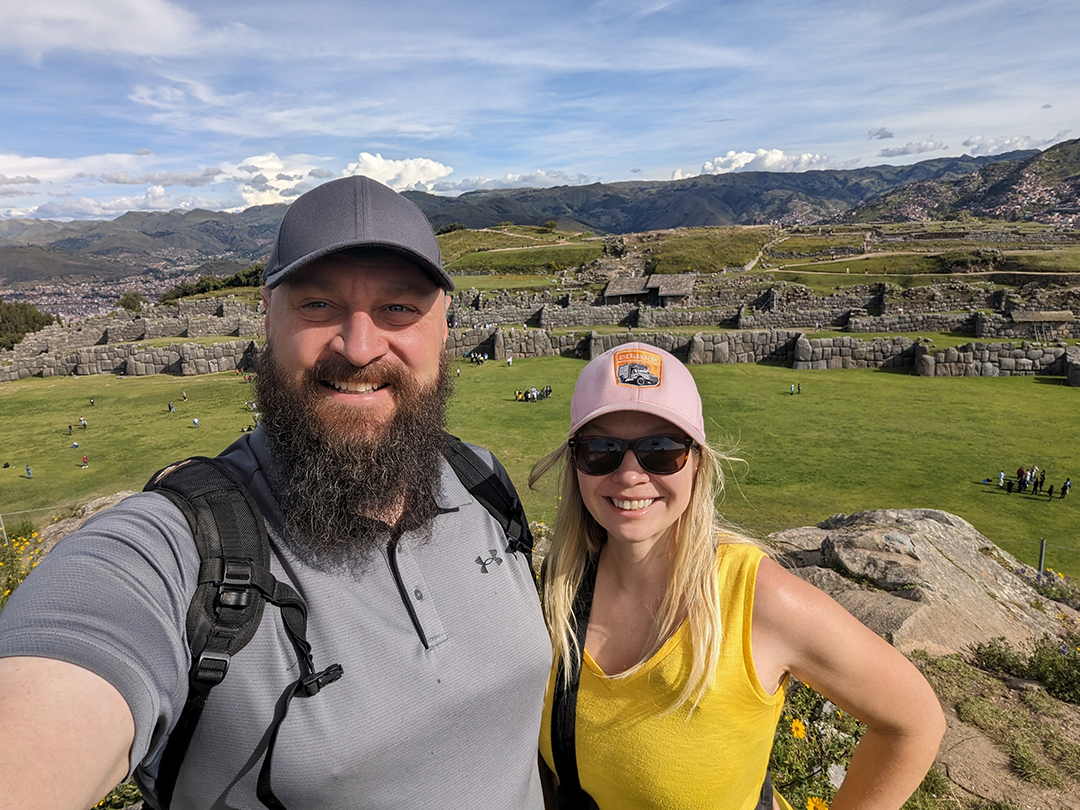
Now we come to our final—and perhaps most impressive and enigmatic—archaeological site in the Cusco region: Sacsayhuamán. This massive Inca fortress towers above the city on a high ridge, with sweeping views over Cusco and the surrounding valley. What makes it so incredible is the use of enormous megalithic stones, fitted together with such precision that no mortar was needed. Some of these stones are truly mind-blowing in scale—the largest weighs an estimated 125 tonnes! Just imagine the weight of nearly 19 of our fully loaded rig stacked into one giant Inca stone! Standing beside them, it’s almost impossible to imagine how the Inca managed to move and place them using only hand tools and human power.
The scale and precision of the construction are unlike anything else we’ve seen on our journey. The zigzagging walls are thought to have had ceremonial and military purposes, and the entire site was once a key spiritual and strategic center of the Inca Empire. During the Spanish conquest, much of the fortress was dismantled, and the stones were used to build homes and churches in Cusco. But the largest stones, too massive to be moved, still remain.
This is a popular site, especially with tour groups, so we recommend arriving early if you want to enjoy it before the crowds arrive. A great tip for fellow overlanders: if you’re staying at Quinta Lala, the well-established overlander campground just outside the city center, you’re perfectly positioned—Sacsayhuamán is only about a 10 minute walk from the campground.
Included in the Cusco Boleto Turístico, Sacsayhuamán is not only a must-see—it’s a place that truly leaves you wondering how they did it. From the sheer size of the stones to the perfect alignment and the commanding view over Cusco, it’s a powerful reminder of just how advanced the Inca civilization really was.
If you want to see a detailed video of Sacsayhuamán—where we even try out the Incan slide, a smooth, polished rock formation that’s unexpectedly fun—we’ve made a full video just for our YouTube Channel Members. If you’ve ever considered joining, it starts at just $1.99 USD per month and gives you access to exclusive travel and tech content. Your support helps us keep creating and sharing our adventures—thank you!




Peru is so much more than just Machu Picchu—it’s a country filled with awe-inspiring sites that showcase the brilliance of the Inca civilization. If you’re traveling through the Sacred Valley, don’t miss the chance to explore these incredible ruins that each offer something truly unique.
 Everlanders